

Career coaching, mentorship and early intervention improve teacher retention, a key piece to combat a state-wide teacher shortage.
In recent years, school districts across the country have grappled with a growing teacher retention crisis, with many educators leaving the profession after just one year in the classroom. High stress, limited support and increasing demands have contributed to an alarming turnover rate that disrupts student learning and places added strain on schools. In response, local districts are reevaluating how they recruit, support and retain teachers, recognizing long-term success in education depends on investing in those at the front of the classroom.
The scope of the problem
Not that long ago, Edmond Public Schools was struggling to find teachers and keep them. As recently as the 2021-22 school year, 70 percent of district secondary teachers and 55 percent of elementary teachers quit following their first year on the job.
Moore Public Schools found itself in a similar situation. Six years ago, Oklahoma’s fifth-largest school district relied heavily on first-year teachers who lacked formal training because they had not completed traditional education degree programs.
“We became very aware that, like everybody else in Oklahoma, we were having a really hard time securing teachers,” said David Peak, a longtime Moore district administrator who oversees elementary and secondary education and instruction. “The other thing we found was about 70 to 75 percent of our hires came in through a non-traditional track.”
Many of Moore’s new teachers were hired with emergency or alternative certificates, a direct result of the district facing a teacher shortage, as well as the impact of the pandemic.
“They don’t have the first idea about how to teach other than just the social learning they experienced from going to school themselves,” Peak said. “What you see is that you’ve got folks who are perpetuating good and bad habits.”
Edmond’s solution: Personal connection
Associate Superintendent Randy Decker, who oversees human resources for Edmond Public Schools, turned to Dondrei Williams, a highly organized, tech-savvy teacher and coach from Texas, to be the district’s first recruitment and retention specialist. EPS then moved several top teachers into new roles as early career coaches and called on veteran elementary school principal Nicole Marler to lead them.
“What we found … is that in order to retain the next generation of teachers, we needed to make sure that our on-boarding process was more robust,” said Marler. “[Teaching] is a challenging position, even when you’re a veteran. But certainly, when you’re fresh out of college, there’s a big learning curve. There’s a lot of things that you have to get good at quickly in order to be successful.”
Edmond’s career coaches are skilled educators and proven leaders whose sole responsibility is to take care of first-year teachers. Because the coaches are not connected to teacher evaluations or building culture, they’re able to be an objective lens to help first-year teachers navigate challenges.
Williams also polls teachers during their first year to find out how things are going.
“We look at that data and then if there are some things that we need to [change], we get it to the right people that can help make that happen,” Williams said.
The turnaround for Oklahoma’s fourth-largest district, with 25,000 students and 1,800 teachers, has been dramatic. Edmond Public Schools retained 93 percent of its first-year elementary teachers and 85 percent of first-year secondary teachers following the 2024-25 school year.
“Honestly, I don’t know of another factor that has turned that so quickly [other] than the personal connection that career coaches are bringing,” Decker said.
Moore’s approach: Embedded mentorship
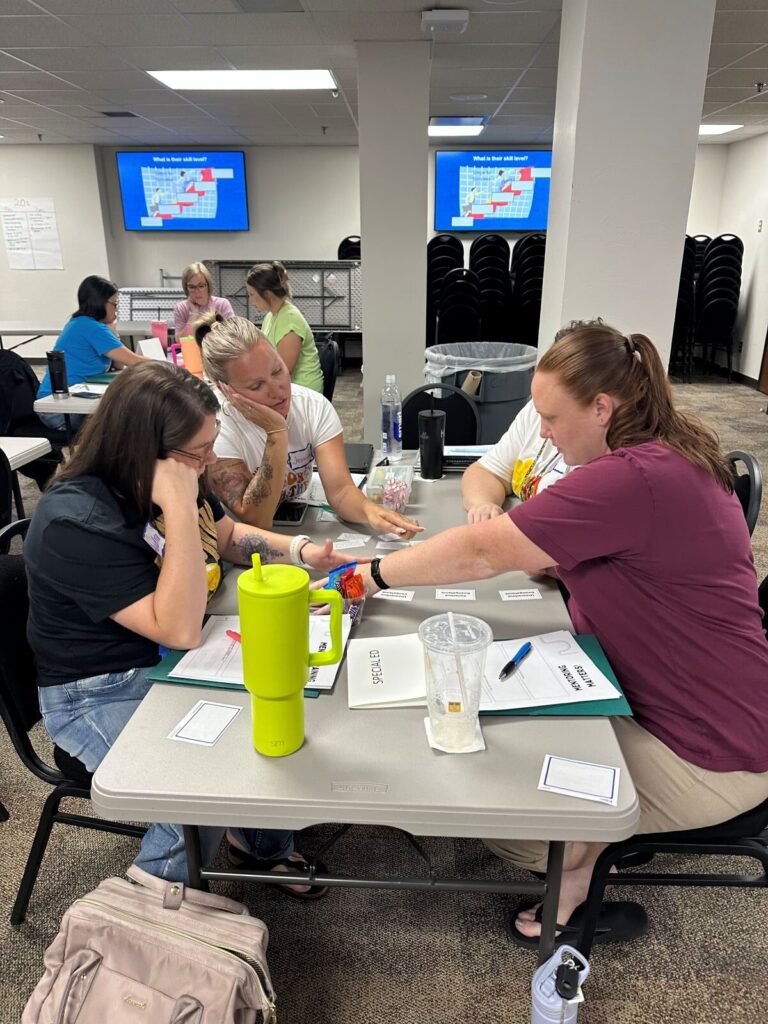
Moore Public Schools developed what Peak calls “mentorship on steroids” — an instructional model complete with “non-negotiables for moving forward.” Mentors anticipate the biggest challenges teachers will face and then front-load solutions. Strategies are phased in over the first year so new teachers don’t get overwhelmed.
“We recognized that if we hit these new people with everything they need to know two days before school starts, it’s impossible,” Peak said.
Michelle McNear, a deputy superintendent in charge of human resources for MPS, called the district’s mentorship program a “lifeline for our new teachers.”
“A lot of teachers struggle with classroom management in the beginning,” said McNear. “You learn the theory of it in college. But then, when you have a kid standing in front of you saying ‘no,’ that’s a whole different thing for a 22-year-old.”
Moore’s instructional coaches, whose sole job is to support classroom teachers, visit school buildings to observe and monitor first-year teachers, providing strategies as needed.
“If there are pieces of our strategies that our new teachers aren’t understanding, our coaches will actually model it for them,” Peak said. “They’ll say, ‘Let me come out and teach using this strategy. You can watch me, then the next hour you can try it, I’ll coach you and then we can see where we’re at.’ That has been incredibly effective.”
The district has also launched Effective Teacher Academies, which include two full days of instruction, one at the beginning of each semester. Teachers who need additional assistance can attend monthly 90-minute sessions after school.
Moore retained between 75 and 80 percent of first-year elementary and secondary teachers following the 2023-24 school year. The national average is between 60 and 65 percent.
Supporting teachers beyond the classroom
Both districts recognize that teacher retention goes beyond classroom support. Moore offers an employee assistance program, career tech and education tech programs for teachers, and a fully funded retirement system. In September, the district is scheduled to open a child development center across from Moore High School that will offer childcare for teachers and staff at a reduced rate.
“I feel like that will be a great recruitment tool,” McNear said. “The flip side of that is it’s also going to offer us a place where we can give childcare to our students who are teen moms and dads.”
The district is addressing the need for special education teachers by recruiting from within and offering a salary increase from 5 to 10 percent.
What this means for families
These innovative approaches to teacher retention directly benefit students and families. When teachers stay, students experience more consistent instruction and stronger relationships with their educators. The comprehensive support systems both districts have implemented ensure first-year teachers receive the guidance they need to be effective in the classroom from day one.
Both districts are now using their support programs as recruiting tools, helping them attract quality candidates who know they’ll receive the help they need to succeed.
“(New educators) are savvy,” McNear said. “They want to know what you can offer them. [We tell them] we’re not going to put you in a classroom and shut the door and expect you to do it on your own. We’re going to offer support.”
Editor’s note: This article is part of a year-long series called What’s Right with Our Schools, highlighting the innovative and inspiring programs shaping public education in the Oklahoma City metro. Each installment explores a different theme, showcasing how educators, administrators and communities are coming together to create meaningful opportunities for students. Read the full series at metrofamilymagazine.com/whats-right-with-our-schools.